
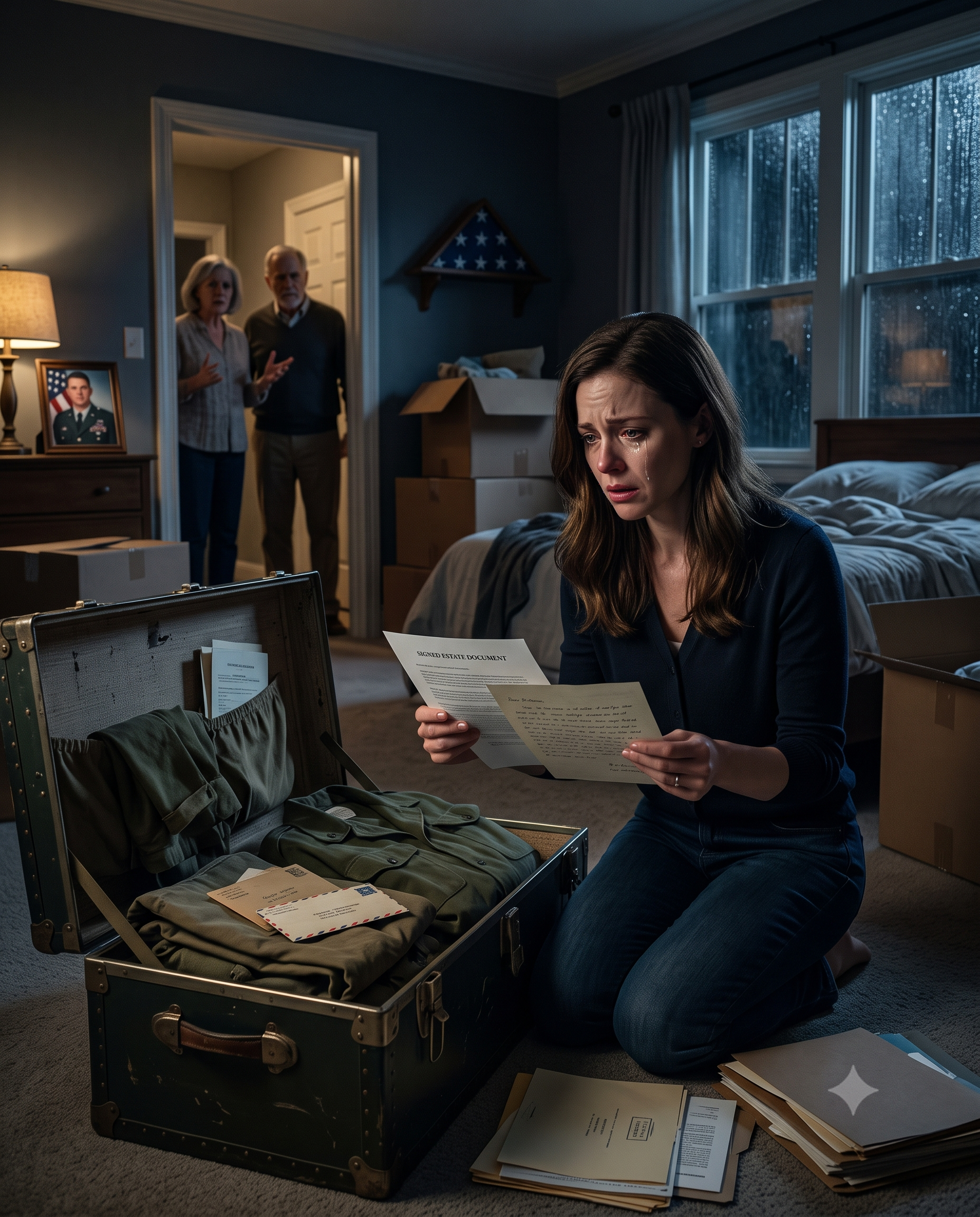
Chapter 6
"No. He told me the house was ours."
Jonathan nodded and continued reading.
After nearly an hour, he put down the last document.
"Your husband's records appear to provide substantial grounds to challenge your in-laws' claim. We'll need to verify the current title, confirm the estate position, and review the full agreement. But their demand letter is not the same thing as a court order, and it does not establish that they have the right to evict you."
I felt my shoulders loosen.
"So I can stay?"
"Based on what I've seen, you have a strong basis to contest their demand. I don't want to promise an outcome before completing the review. But you should not assume you must leave simply because they told you to."
For the first time in days, I could breathe.
Jonathan turned to another document.
"There is something else."
He showed me a section of the agreement dealing with the financial contribution Ethan's parents had made.
Their money had been recorded as a documented contribution under specific conditions. It was not evidence that they automatically owned the entire property. The agreement also established a procedure for resolving disputes.
"They may have a financial claim depending on the terms and any outstanding obligations," Jonathan explained. "We won't ignore that. But a financial claim is not the same as ownership of the whole house, and neither automatically gives them the right to put you out."
I nodded.
"What do we do now?"
"We respond through counsel. We request that they identify the exact legal basis for their demand. We confirm the title and estate documents. We also instruct them not to interfere with your possession of the property while the dispute is being resolved."
"Will they listen?"
Jonathan gave me a sympathetic look.
"I suspect they will when they understand the evidence."
He prepared a formal response that afternoon.
It included copies of the relevant recorded documents and requested that Richard and Patricia withdraw their demand or explain the legal basis for it.
The response was sent by certified mail and email.
Two days later, Richard called me.
I nearly let it go to voicemail.
Instead, I answered.
"What did you send my attorney?" he demanded.
"My lawyer responded to your demand."
"Those documents don't change anything."
"They change quite a lot, actually."
"You don't understand the arrangement we made with Ethan."
"I understand that you helped finance the house. I also understand that Ethan documented the arrangement, and the documents don't say what you claimed they said."