
Chapter 4
I read it twice.
My hands began to shake.
Ethan had known.
He had known his parents might try to control what happened to the house after his death.
And he had made plans.
I searched the office until I found the blue folder.
But the most important documents weren't there.
At the bottom of the note, Ethan had written one final sentence.
The original is in the footlocker.
I knew exactly where it was.
Chapter 3: The Footlocker
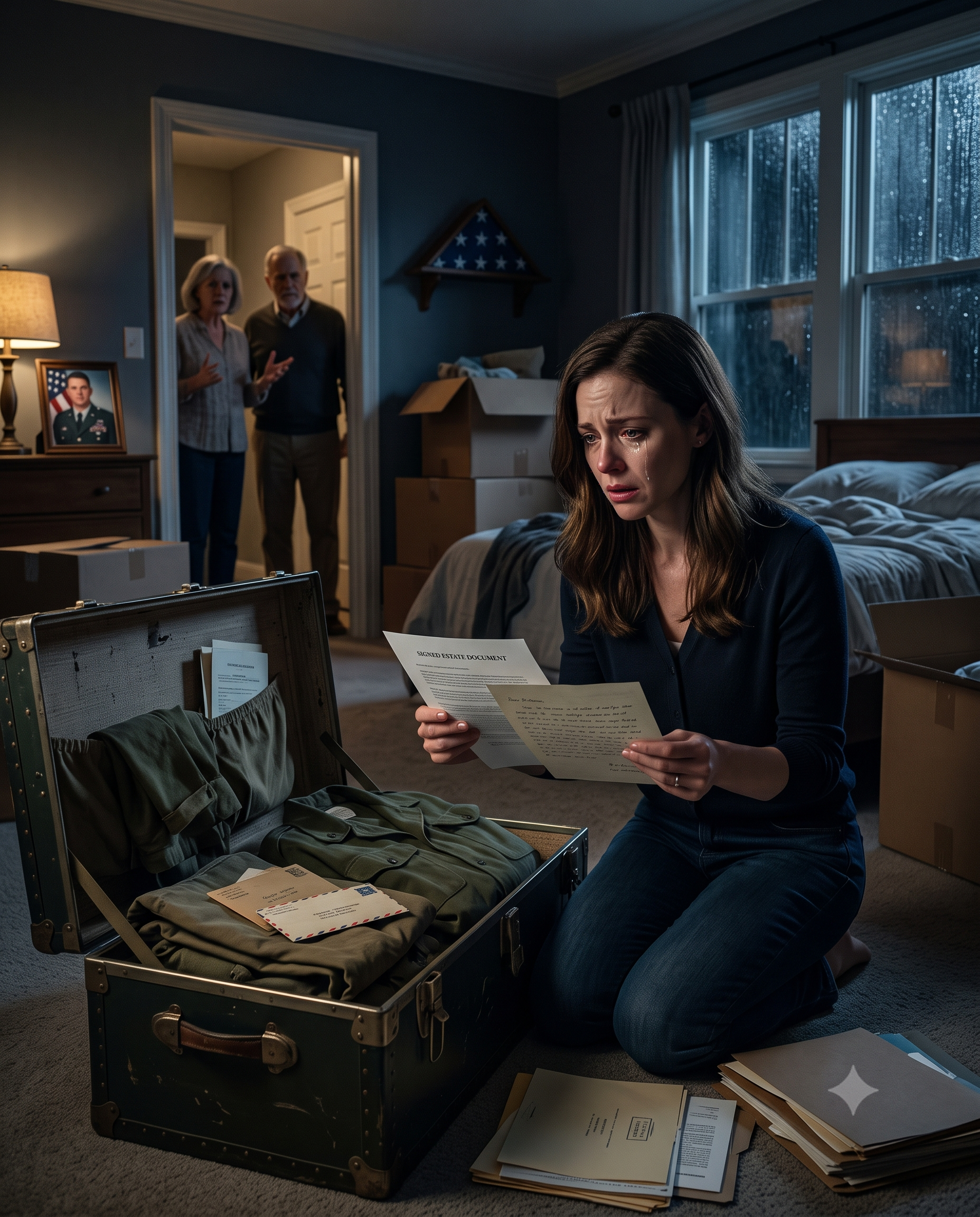
Ethan's military footlocker sat beneath the window in the spare bedroom.
He had brought it home from his previous assignment and used it to store deployment equipment, old photographs, and personal documents he didn't want exposed to sunlight or moisture.
I had not opened it since the casualty assistance officer returned Ethan's personal effects.
The lock clicked when I turned the key.
Inside were folded uniforms, a worn pair of boots, a stack of letters, and a small wooden box containing his dog tags from an earlier training exercise.
At the bottom lay a large envelope bearing the name of an attorney in Richmond.
The envelope was dated five months before Ethan's final deployment.
Inside were copies of a recorded property instrument, a signed estate planning document, a written agreement concerning the house, and a letter from Ethan's attorney confirming that the relevant paperwork had been executed and filed.
I sat on the floor and read everything.
The documents revealed a very different arrangement from the one Richard had described.
Ethan had acquired the property through a documented purchase arrangement. His parents had contributed money at the beginning, but the contribution had been recorded as part of a formal agreement rather than an unrestricted gift to the family.
More importantly, the recorded property documents identified Ethan and me as the owners, subject to the mortgage and the specific terms of the agreement.
A separate estate planning document addressed what would happen to Ethan's interest in the property if he died before me.
The exact legal effect depended on the recorded deed, the applicable law, and the estate administration process. But one thing was immediately clear: his parents could not simply declare the house theirs because their son had died.
The letter from Ethan's attorney was even more revealing.
It stated that Ethan had specifically asked for independent legal advice about protecting my housing rights. He had explained that his parents had helped finance the purchase but had repeatedly suggested that the home should remain under their control.