
Chapter 15
She nodded slowly.
"I know that now."
It was not a complete apology.
It did not erase the demand letter, the pressure, or the weeks I had spent wondering whether I would be forced to leave my own home.
But it was the first honest thing she had said to me in months.
Richard remained standing by the doorway.
He looked uncomfortable, as though he wanted to say something but couldn't find a version of the words that would preserve his pride.
Finally, he said, "Ethan was always stubborn."
I almost smiled.
"Yes. He was."
"He didn't like being told what to do."
"No."
Richard looked toward the wedding photograph.
"I suppose he made his decision."
"He did."
For several seconds, we stood together in silence.
Then Patricia collected the box of belongings I'd prepared for them, and they left.
I watched their car disappear down the street.
I did not feel the satisfaction I had imagined during those first desperate weeks. I did not feel the urge to celebrate their defeat.
I felt tired.
I felt sad.
And I felt grateful that I no longer had to prove to anyone that I belonged in the home my husband and I had built.
That spring, I repaired the porch.
I replaced the loose board, planted new flowers along the walkway, and started a small vegetable garden in the backyard.
I took Ethan's letter to the ocean.
I stood at the edge of the water and read it one more time, letting the wind carry the sound of the waves around me.
Then I folded the letter and placed it safely in my bag.
I would never need to use it to prove my rights. The signed documents had already done that.
But I would keep it for the rest of my life.
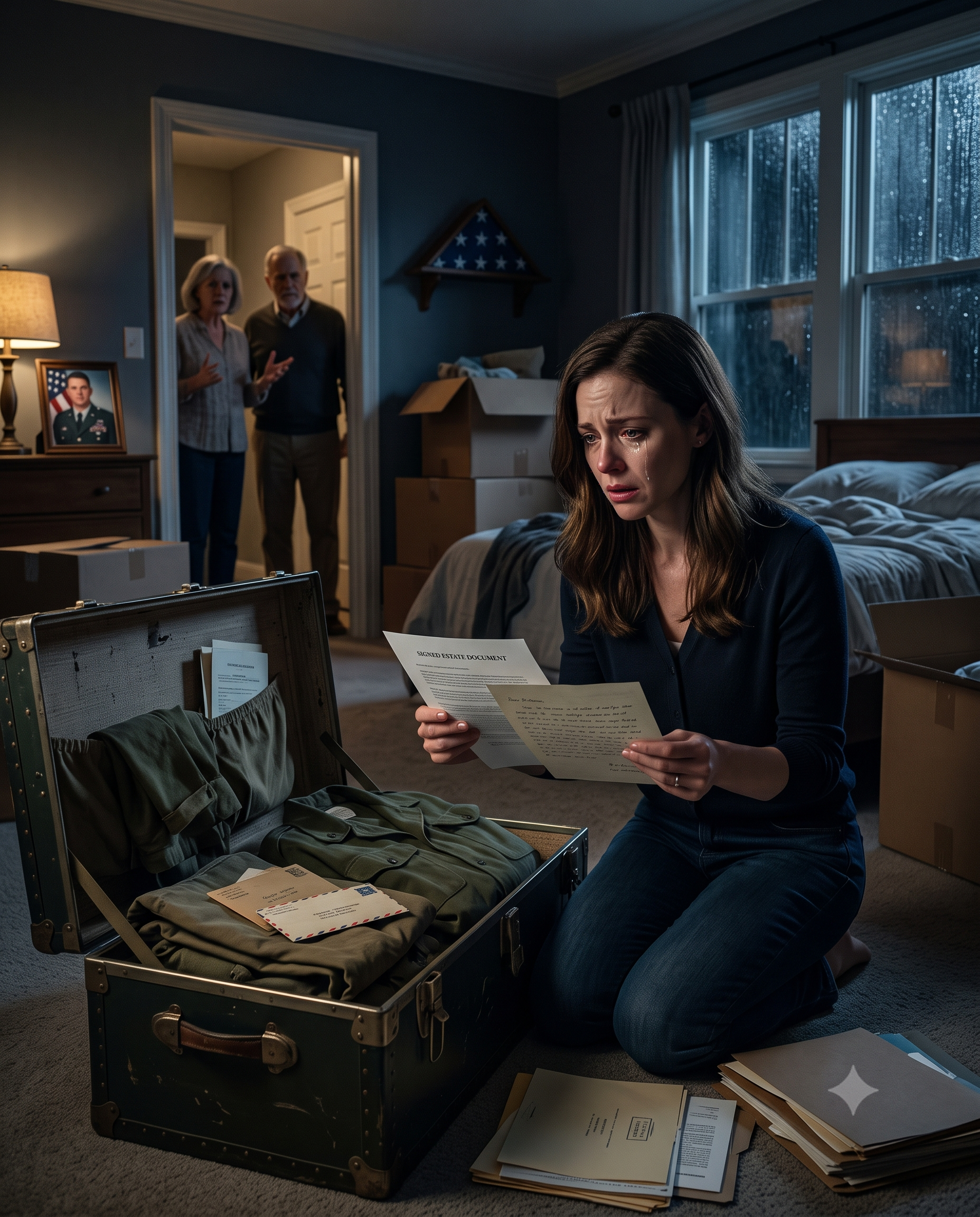
Because the most important thing Ethan had signed was not a deed, an agreement, or an estate document.
It was the promise he had made to protect the woman he loved, even when he could not be there to do it himself.
His parents had believed his death gave them the power to decide my future.
They were wrong.
Ethan had made his decision while he was alive. He had put it in writing, obtained independent legal advice, and ensured that his wishes were documented.
They could challenge the papers.
They could argue about money.
They could even refuse to understand why he had drawn those boundaries.