
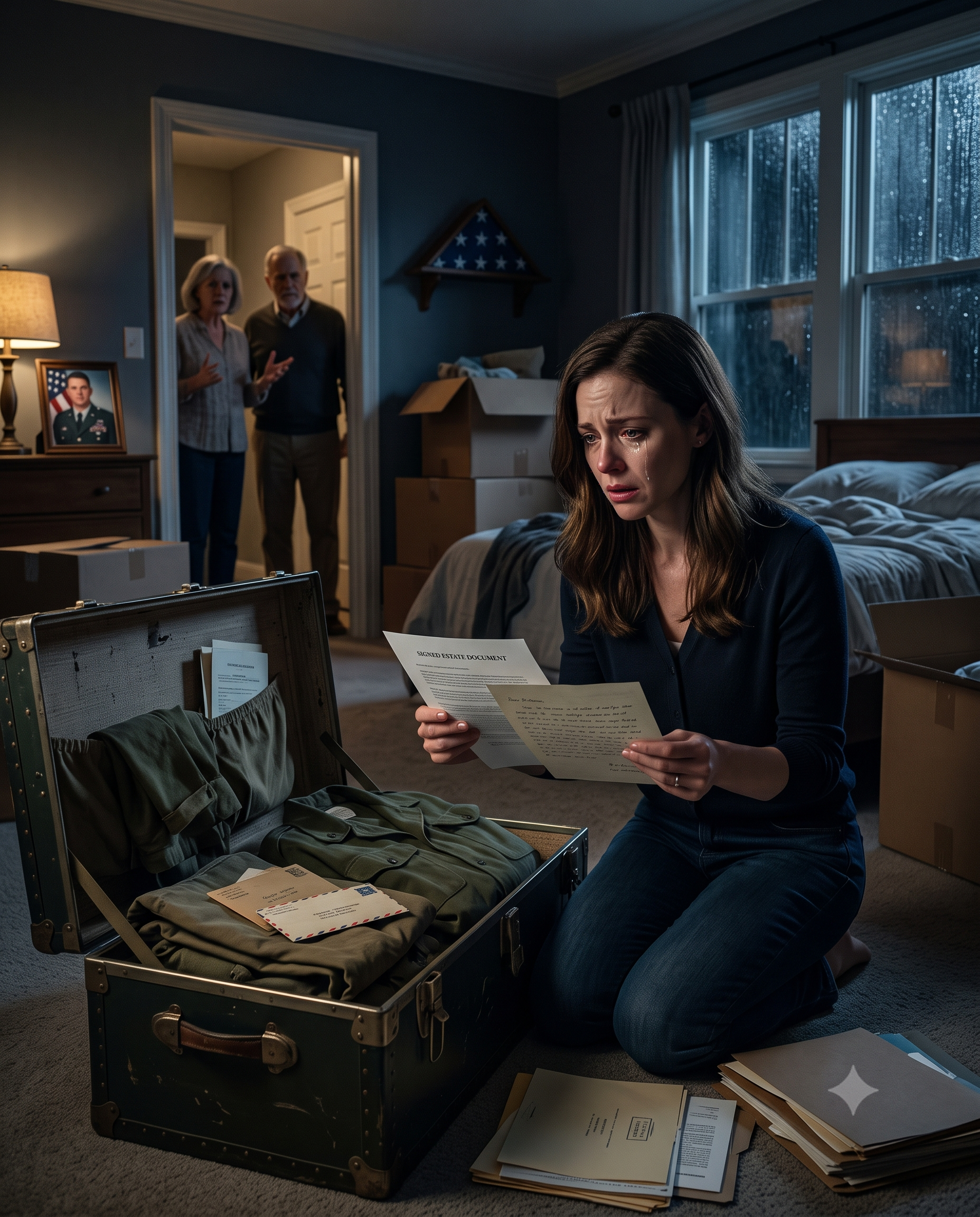
Chapter 11
A week later, their attorney proposed mediation.
Jonathan agreed, provided the session was conducted with independent representation and no pressure to sign an immediate settlement.
During mediation, Richard argued that the family's financial contribution entitled them to control the property.
Jonathan responded with the recorded documents, the signed agreement, and Ethan's estate planning papers.
The mediator asked Richard's attorney to identify the precise provision that granted Richard and Patricia the right to evict me.
Their attorney requested a break.
When the meeting resumed, his position had changed.
He acknowledged that the ownership documents presented a significant obstacle to his clients' demand. He also recognized that any repayment claim would have to be evaluated separately and could not simply be converted into an immediate right to possession.
Richard was furious.
"This is ridiculous," he said. "We paid for part of that house."
Jonathan answered calmly.
"Then the agreement governing that contribution should be honored. It should not be rewritten after your son's death."
Patricia looked at me.
"Do you really intend to keep the house?"
I thought of the porch, the crooked fence, and the kitchen where Ethan had danced with me while we waited for pasta water to boil.
"I intend to honor the agreement Ethan made and protect the home we built together."
"So you won't compromise?"
"I am willing to resolve any legitimate financial issue fairly. I am not willing to surrender the house because you expected me to be too frightened to defend myself."
The mediation ended without a final settlement.
But something had changed.
The threat of immediate eviction was no longer hanging over my head. The parties had agreed to preserve the status quo while the remaining financial issues were reviewed.
For the first time, Richard and Patricia had to deal with the documents rather than the person they had assumed I would be.
Chapter 8: What Ethan Had Really Signed
Several weeks later, the estate review was completed.
The attorney handling the estate confirmed the relevant provisions of Ethan's will and the ownership documents. Together, they supported my right to retain the property, subject to the applicable estate process and any obligations expressly established by the agreements.
The house was not a family asset that Richard and Patricia could simply reclaim.
Their potential financial claim was limited to the terms of the written agreement.
The distinction mattered.
For months, they had spoken as though their contribution had given them unlimited authority over our home. But Ethan had not signed away my future. He had documented what each party had agreed to, and he had made estate provisions designed to protect me if he died.