
Chapter 4
She came to family events with me, and I attended hers.
Then Richard began offering us financial help.
He paid for a vacation, then insisted on covering a home renovation. He gave Caroline a credit card connected to one of his accounts for “emergencies.”
At first, I didn't object.
I knew her family had more money than mine. I didn't consider that a threat.
But the assistance gradually became leverage.
When Richard paid for our kitchen renovation, he joked that he was increasing the value of the property because I clearly couldn't afford to do it myself.
When he bought us a used SUV, he reminded me at every family dinner that Caroline would have been driving something much better if she had married a businessman.
When I received a promotion, he asked whether it came with “a meaningful raise.”
Caroline always asked me to ignore him.
“He's proud of what he built,” she said one night. “He doesn't understand your world.”
“Does he need to understand my world to respect me?”
She sighed.
“Why does everything have to become a discussion?”
I looked at her for a long time.
“Because when I don't discuss it, it keeps happening.”
She rolled over and went to sleep.
I stayed awake, listening to the ceiling fan.
I had never expected her to fight every battle for me. But I had expected her to stand beside me when her family treated me as though I were a temporary inconvenience.
Instead, she kept asking me to make their behavior easier for them.
Over time, I stopped talking about my work around her family.
I stopped sharing stories from the Army, especially anything that involved difficult assignments or people I had lost.
Richard wasn't interested in the reality of military service. He wanted numbers, titles, and a career plan he could compare with the lives of his business friends.
So I gave him nothing.
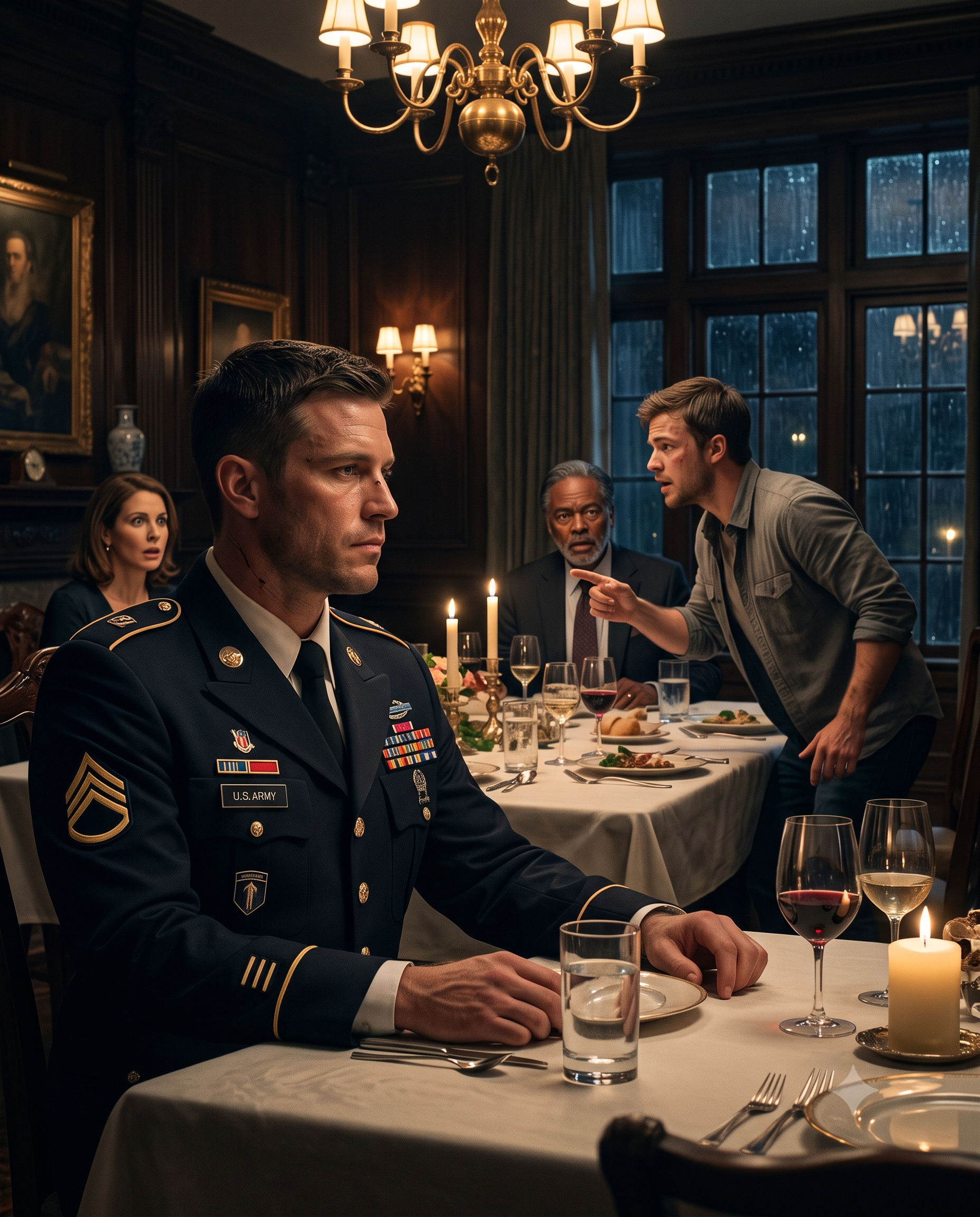
I wore my uniform when required. I drove my old truck. I continued serving.
And I let him believe that he understood me.
That decision would matter more than I could have imagined.
Chapter 3: The Son They Almost Lost
Daniel Lawson was twenty-seven when he was injured overseas.
He had never served in the Army. He worked as a civilian logistics specialist supporting an international humanitarian operation, coordinating deliveries of medical supplies and essential equipment.
His work sometimes brought him close to dangerous areas, although his family rarely discussed the risks.