
Chapter 2
The Ultimatum: Shifting the Weight of Personal Decisions
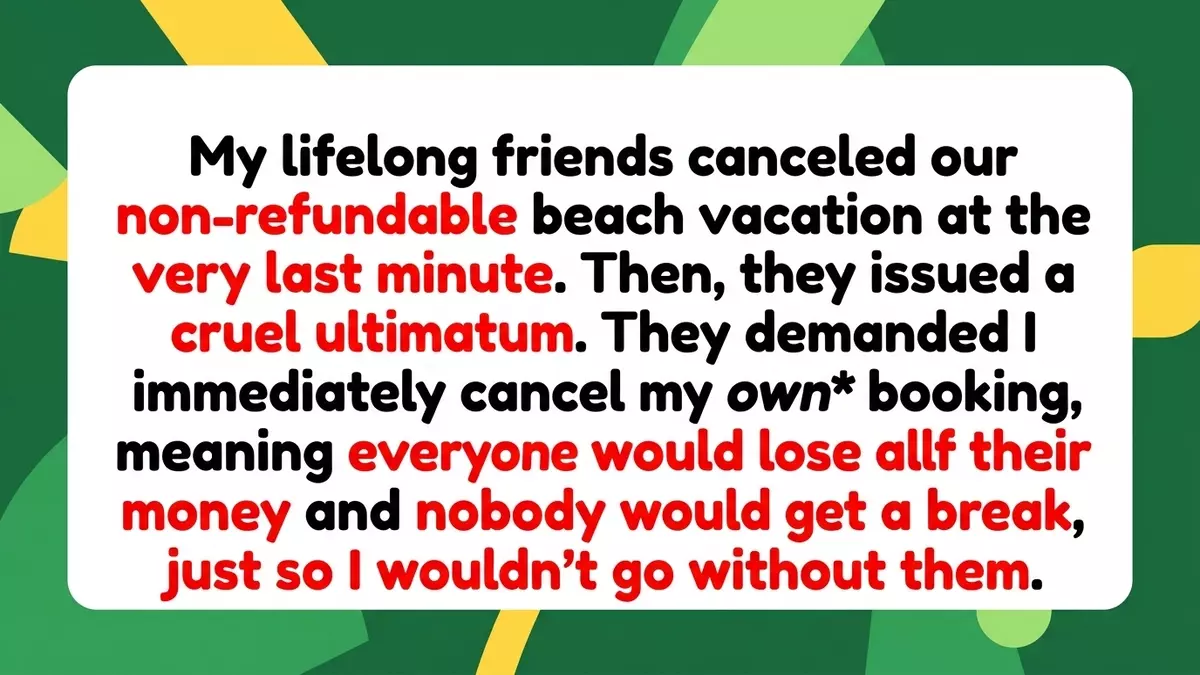
By demanding a total cancellation of a non-refundable reservation, the departing friends attempted to bypass the consequences of their choices. Because the vacation rental company maintained a rigid, ironclad policy, canceling the reservation would not return a single dollar to anyone. Instead, it would create a absolute lose-lose scenario: the retired friends would still lose their deposits, the remaining traveler would lose their hard-earned money, and the entire vacation opportunity would be completely destroyed.
This behavior highlights a fascinating and problematic shift in modern interpersonal dynamics. Rather than absorbing the financial risks of their own sudden lifestyle changes, the friends expected the remaining traveler to stand in solidarity with their misfortune by sacrificing her own essential time off. This crosses an explicit personal line, transforming a financial mistake into an emotional hostage situation where the author is forced to choose between her own well-being and the fragile feelings of her peer group.
The Psychology of Loss Aversion in Adult Friendships
To understand why otherwise rational adults would make such an illogical demand, it helps to look at the underlying behavioral psychology. Relationship specialists note that when money and friendships collide, people frequently fall prey to a cognitive bias known as loss aversion.
What is Loss Aversion?
Originally identified in behavioral economics, loss aversion is the psychological tendency to prefer avoiding economic losses far more than acquiring equivalent gains. The emotional pain of losing $500 is statistically twice as intense as the joy of gaining the same amount, frequently driving individuals to act irrationally or unfairly to recoup their funds.
In the context of this group trip, the retired friends were likely panicking over their lost capital. Trapped in a state of financial desperation, they were looking for any microscopic loophole or corporate bypass to unlock a refund.
By pressuring the author to cancel, they were operating under the false psychological assumption that a total cancellation might force the rental manager's hand. In doing so, they allowed their personal panic to blind them to the social contract of group travel: once a non-refundable deposit is paid, each individual is structurally responsible for their own share, regardless of whether they ultimately board the plane.
How to Set Firm and Empathetic Boundaries
Navigating the fallout of a canceled group itinerary requires a delicate balance of deep empathy and immovable, firm boundaries. Sacrificing your own mental health and financial assets to placate someone else's mistake is never a sustainable solution.