
Chapter 13
Not everyone forgave him.
Some people said his apology came too late. Others argued that he had only changed his position because the soldiers had embarrassed him in public.
I didn't try to decide what was in his heart.
I had learned that accountability was not about forcing someone to feel a particular emotion. It was about making them acknowledge what they had done and take responsibility for the consequences.
Harold had finally begun doing that.
It didn't restore the weeks I had spent doubting myself.
It didn't erase the words painted across my driveway.
But it was a beginning.
Chapter 9: The Men Who Remembered
Six months after Daniel's death, the Army formally updated the family on the review's conclusions.
The revised account recognized Daniel's efforts to assist wounded personnel during the operation and stated that the evidence did not substantiate the allegation that he had abandoned his unit.
His family was informed that his conduct during the mission had been consistent with his efforts to protect and recover his fellow soldiers under dangerous conditions.
There were still details that could not be made public.
There were still questions about why the earlier account had been incomplete.
But the central accusation had been answered.
Daniel had not run away from his men.
He had gone to help them.
The town organized a memorial ceremony at the veterans' park. This time, the invitation included Daniel's fellow soldiers, the families of the wounded, and anyone who wanted to honor his service.
The mayor asked whether I would speak.
I almost refused.
I had spent months trying to explain my husband's death to people who had already decided what it meant. The idea of standing in front of another crowd made my stomach tighten.
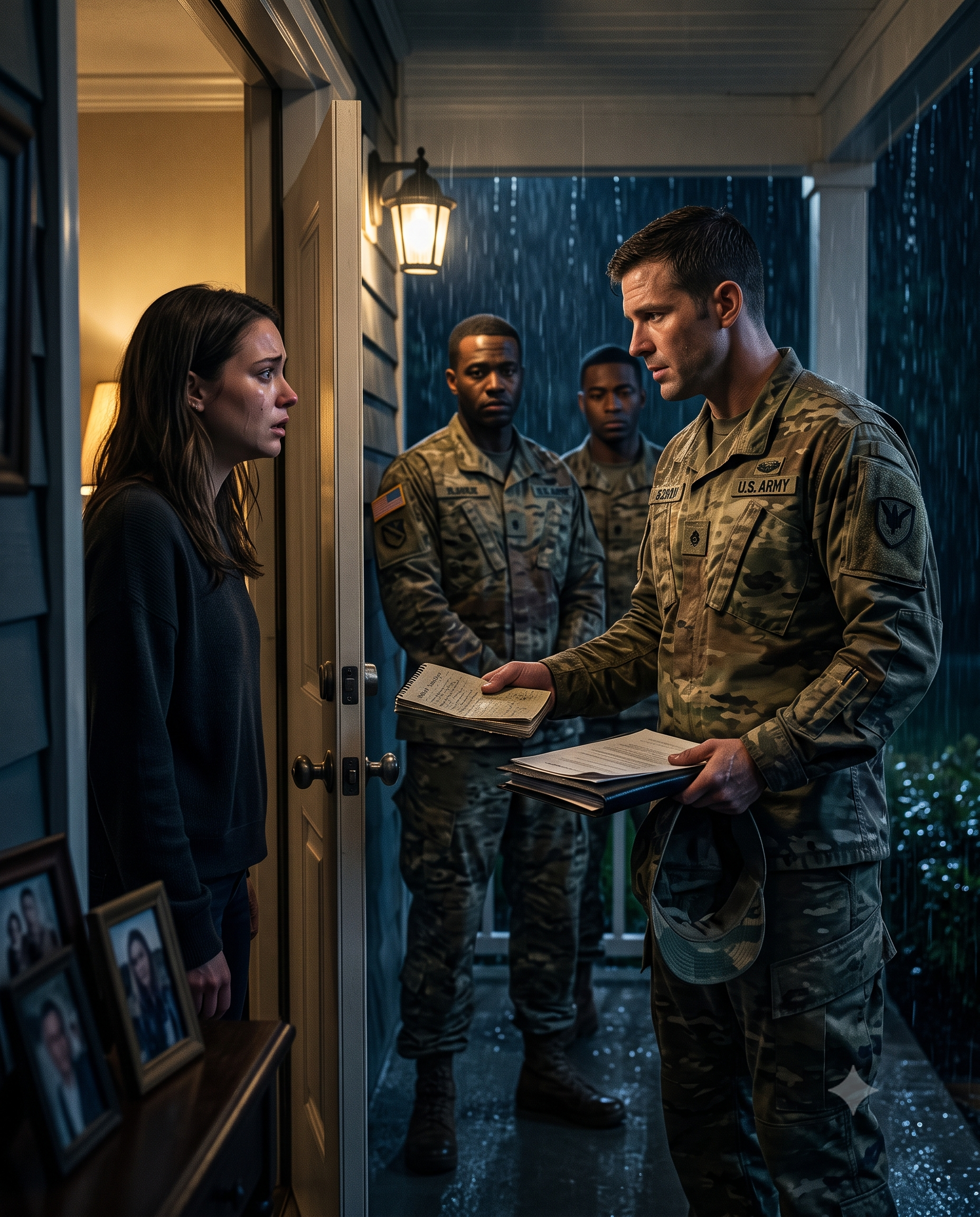
Then I thought about Daniel's final notebook entry.
If I have to choose, the men go first.
I agreed.
The ceremony took place on a clear autumn morning. Red and gold leaves covered the grass. The American flag moved gently above the crowd.
Cole stood beside Owen and Brooks.
Margaret sat in the front row, holding Daniel's old photograph.
I stepped to the microphone.
"When Daniel was alive, he never liked being called a hero," I began. "He used to say that people did what they had to do and that the real heroes were the ones who never got to come home."
I looked toward the three soldiers.