
Chapter 3
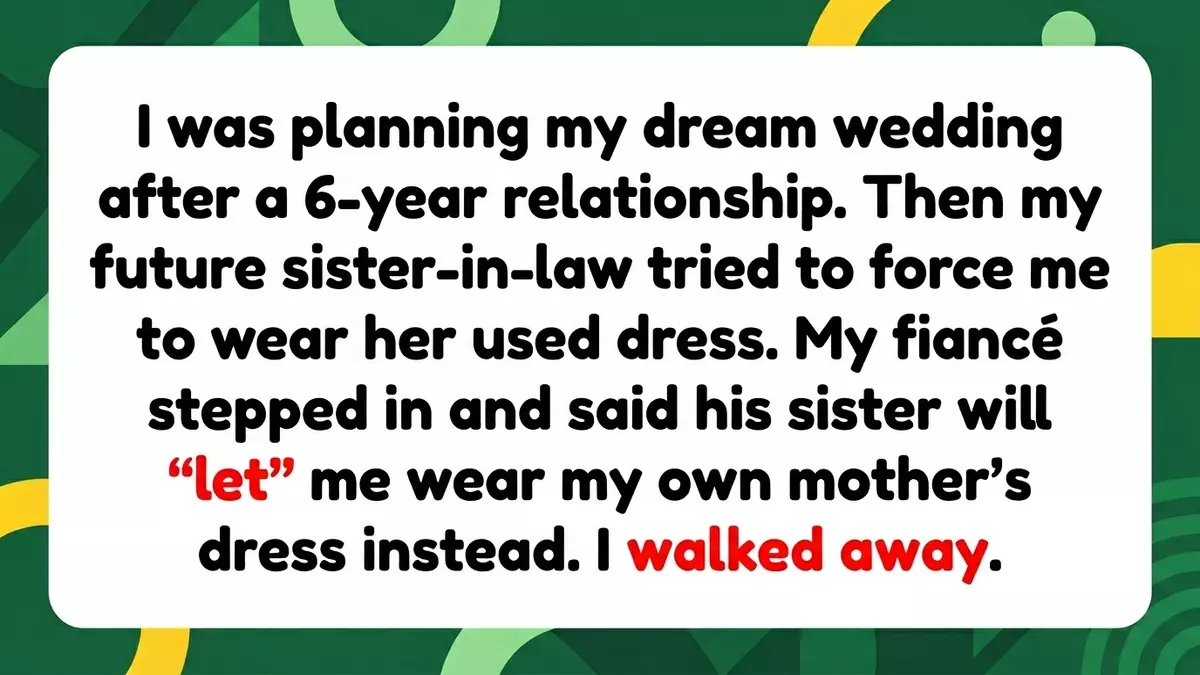
Do Not Step Into a Public Compromise on Basic Rights: While some observers may suggest having "one final, calm conversation" to save the relationship, remember that your baseline autonomy is not up for negotiation. If you have to plead with a partner to respect your right to wear your own mother's dress, the foundational respect required for a marriage is already missing.
FAQs
What does it mean when a partner is enmeshed with their family?
Enmeshment occurs when an adult child lacks clear emotional or structural boundaries with their parents or siblings. In a relationship, an enmeshed partner will consistently prioritize their family's opinions, feelings, and demands over their significant other's well-being, rendering them incapable of forming an independent, loyal marital unit.
Was the bride justified in calling off a six-year relationship over a dress?
Yes. The conflict was never truly about a piece of fabric; it was about the underlying power dynamic, a profound lack of mutual respect, and the fiancé's total failure to protect his partner's autonomy. Calling off the wedding prevented the bride from legally binding herself to a toxic family system.
Why do family conflicts intensify during wedding planning?
Wedding planning forces abstract relationship concepts—like budget allocation, lifestyle choices, and family prioritization—into immediate, real-world decisions. Because the event serves as a public display of family status, entitled relatives often use it as a battleground to reassert control over the couple.
How can you tell if a partner's family is too controlling?
Clear signs include relatives making unilateral demands regarding your schedule or personal events, using guilt trips or passive-aggressive tantrums to enforce compliance, bypassing your boundaries entirely, and your partner constantly making excuses for their behavior rather than protecting you.
What should you do if your partner stonewalls you during an argument?
Stonewalling occurs when a partner completely withdraws from a conversation, shutting down communication by staring at a screen, ignoring questions, or physically leaving the room. If this behavior becomes a chronic defense mechanism during major life crises, it signals a severe breakdown of relationship health that requires professional intervention or an immediate exit.