
Chapter 2
Authoritarian Micro-Management
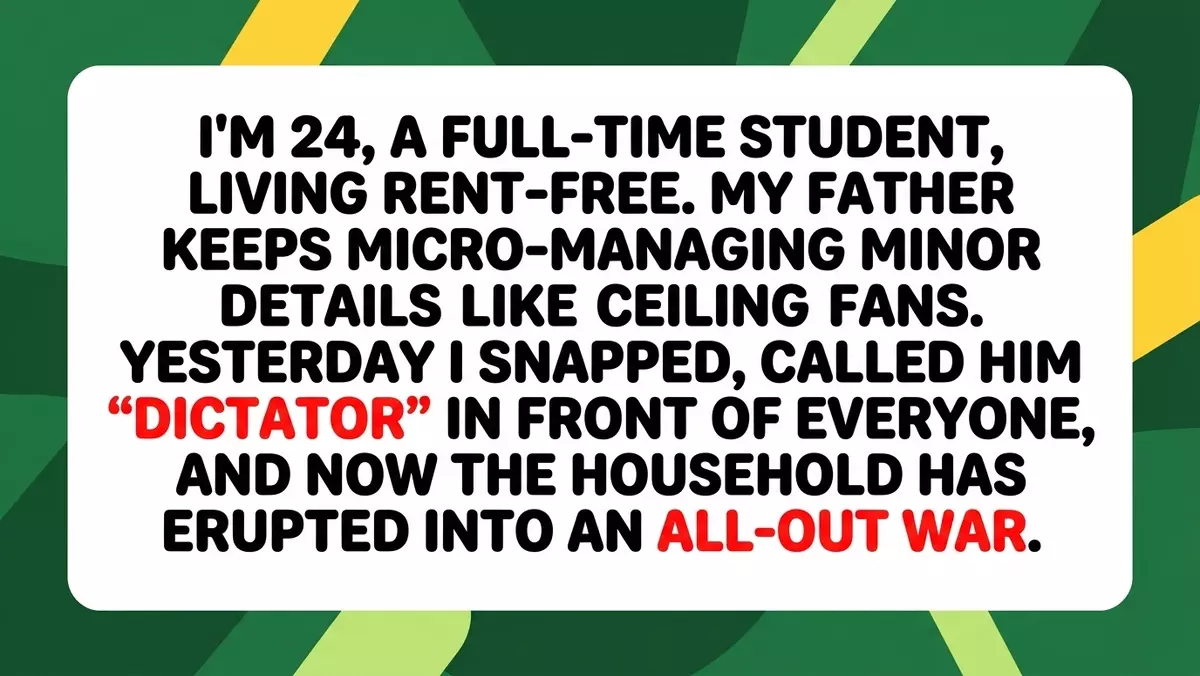
When parents face deep-seated career anxieties, aging pressures, or a perceived loss of relevance, they often default to authoritarian micro-management at home. Controlling small physical details—like the state of a light switch—becomes a coping mechanism to regain a sense of order and structural control over an unpredictable world.
Regressive Roles and Stagnation
For the 24-year-old, remaining financially dependent due to the grueling demands of higher education created an intense internal crisis. Relationship experts note that when adult children live rent-free with their parents, both parties easily fall back into rigid, regressive roles. The father treats the adult son like a helpless child, and the son responds with the volatile rebellion of a teenager. The fight for personal autonomy becomes a daily battle for survival.
The Homeowner's Rules: A Divided Community Verdict
When the story surfaced online, the community was sharply divided, reflecting the complex economic and cultural expectations of modern multi-generational households.
| The Case for the Son | The Case for the Father |
| • The agonizing mental toll of intense full-time studies deserves empathy. | • The harsh reality of living rent-free means playing by the homeowner's rules. |
| • Living under shifting parental moods inflicts a heavy psychological burden. | • The son makes zero financial contribution to the surging utility bills. |
| • Blatant double standards undermine the respect required in adult relationships. | • Calling a parent a "dictator" over an energy-saving request is entirely uncalled for. |
Ultimately, many observers pointed out that while the father's aggressive delivery was fundamentally flawed, the economic reality of the situation tilted the scales of authority toward the parent.
How to Reduce Friction in Multi-Generational Homes
Navigating family dynamics as an adult under your parents' roof is a delicate balancing act. It requires separating minor daily triggers from the larger emotional realities everyone carries. To break the cycle of constant conflict, relationship experts suggest several practical boundaries:
-
Establish a Routine Outside the House: Minimize daily friction by treating the home primarily as a place for rest. Spending study hours at libraries, coffee shops, or campus spaces reduces the hours spent navigating a parent's shifting moods.
-
Initiate Structured, Peaceful Conversations: Do not try to solve systemic family issues during an active argument. Wait for a calm, neutral moment to address the underlying tension, using "I" statements to express the desire to be treated as an adult peer.
-
Acknowledge the Financial Reality: Even if you cannot afford rent, finding small, non-monetary ways to contribute to the household—such as taking over specific maintenance tasks or cooking meals—can help balance the power dynamic and earn mutual respect.