
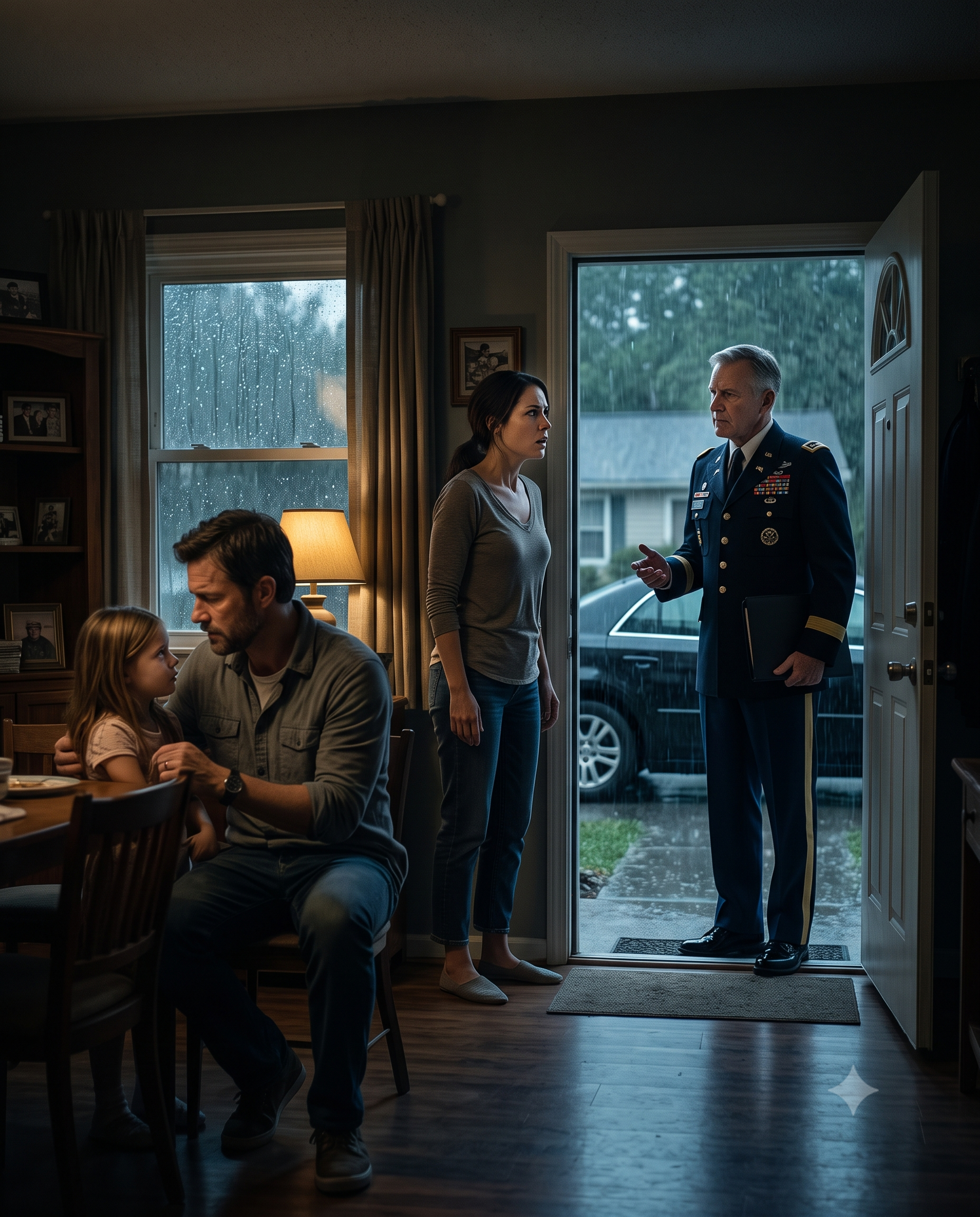
Chapter 6
"No, sir. It isn't."
He sat down and opened a leather portfolio.
"I came for two reasons."
My stomach tightened.
"All right."
"First, the review of your final operation has been completed. The Army has formally documented your actions during the evacuation."
I stared at him.
"What does that mean?"
"It means the record now accurately reflects what happened that night."
The memories returned in fragments: the darkness, the damaged vehicle, the wounded soldiers, and the decision to use an exposed service road after our original evacuation route became unusable.
I remembered checking every casualty twice.
I remembered staying behind to help move the final injured soldier.
And I remembered waking in a hospital, asking whether my team had made it out.
"They all made it home," Colonel Hayes said quietly.
I swallowed.
"I know, sir."
"I also know you never asked for recognition. But that doesn't mean your actions shouldn't be recorded."
He slid the document toward me.
I read it slowly.
For the first time, the official account described the decisions I had made and the risks my team had faced. It acknowledged my role in coordinating the evacuation and assisting the wounded.
I couldn't speak for several seconds.
"Thank you, sir."
He nodded.
"You're welcome."
Then he closed the folder.
"Second, Michael Grant contacted me about the civilian position you've applied for."
I looked up.
"He did?"
"He thought your experience might be a good fit. I agreed."
Colonel Hayes explained that he had spoken with the organization's program director and provided a professional reference, describing my leadership and operations experience.
He was careful to make one thing clear.
"I haven't offered you a job, Carter. That's up to them. But I told them what I know about your work."
I nodded.
"That's more than enough, sir."
He leaned forward.
"Listen to me. Your military career ended. That doesn't mean your usefulness ended with it."
I looked down at my damaged knee.
"Some days it's hard to believe that."
"Of course it is. You're grieving a life you thought you'd have. There's nothing weak about admitting that."
His words reached a place in me that I had kept hidden from everyone, including myself.
"I don't know who I'm supposed to be anymore," I admitted.
He studied me for a moment.
"Then find out. You don't have to become the man you were before the injury. You have to decide what kind of man you want to be now."