
Chapter 2
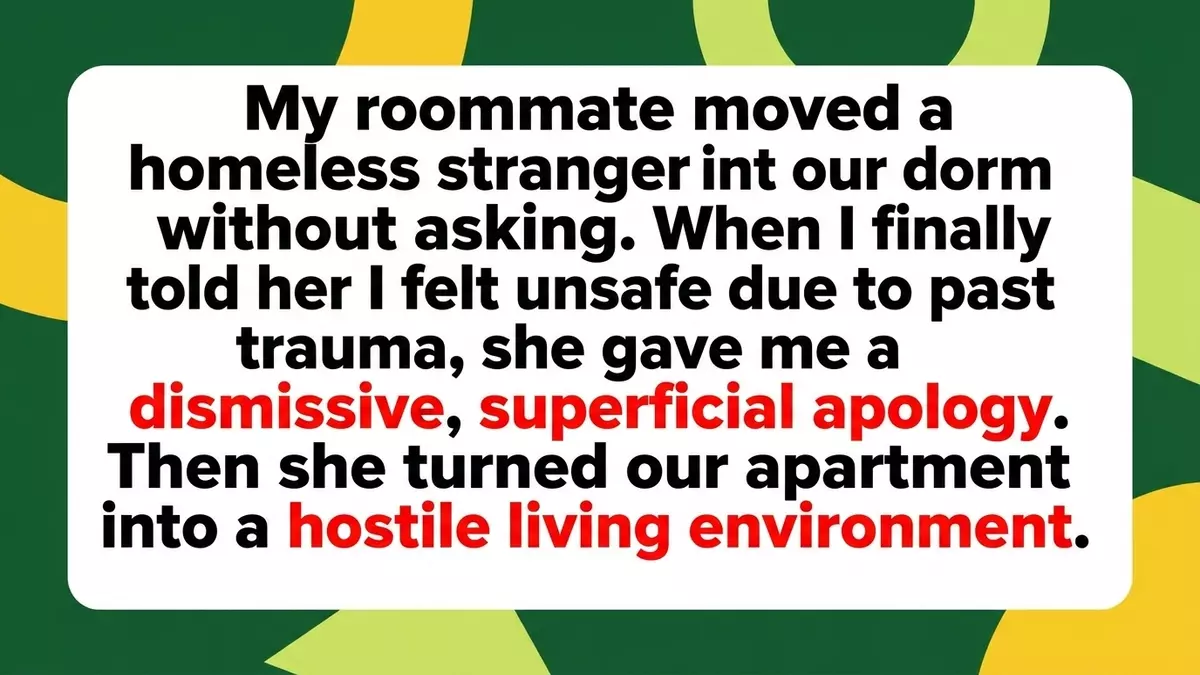
The older roommate completely minimized the younger student's feelings, prioritizing her own agenda over her peer's psychological well-being. This dismissive attitude proved to be the ultimate breaking point for their friendship. The illusion of mutual respect vanished, proving that the home was no longer a safe haven.
The Psychology of Performative Altruism in Shared Spaces
What drives someone to completely ignore a friend's distress and safety boundaries in order to shelter a stranger? Mental health and psychological insights suggest this behavior perfectly illustrates a troubling social pattern known as performative altruism.
What is Performative Altruism?
Performative altruism occurs when an individual engages in high-profile "good deeds" primarily to garner admiration, praise, and validation for their own ego, rather than focusing on the actual impact of their actions or the safety of those involved.
In this scenario, the 35-year-old roommate’s aggressive insistence on keeping the stranger in the dorm seemed less about sustainable charity and more about feeding a grandiose self-image. By casting herself as a selfless savior, she conveniently ignored the fact that true charity does not involve forcing vulnerable people into volatile situations, nor does it require terrorizing and disrespecting the person who shares your home.
The Impact of Boundary Violations on Mental Health
Mental health professionals emphasize that establishing and maintaining clear personal boundaries is absolutely crucial for emotional well-being. A shared home requires a baseline of absolute safety and mutual trust. When one roommate unilaterally decides to transform a private, restricted apartment into an unregulated drop-in shelter, that essential baseline is utterly destroyed.
Hostile Retaliation: The Fallout of Speaking Up
Rather than recognizing her mistake and correcting the situation, the older roommate doubled down. Once the stranger was eventually removed, the living situation devolved into a campaign of petty retaliation and harassment targeted at the 23-year-old student.
The peaceful dynamic of the apartment was replaced by a toxic atmosphere. For the younger student, navigating her own living room became a daily exercise in anxiety, proving that roommate conflicts can quickly transform from simple disagreements into serious liabilities.
Steps to Take When a Dorm Environment Becomes Toxic
For anyone finding themselves in a similar, volatile housing situation, experts and student housing advocates recommend a swift, documented approach:
-
Document Everything: Keep a detailed, chronological log of every policy violation, instance of harassment, or passive-aggressive behavior.
-
Involve Campus Authorities: Report the unauthorized guest and safety violations directly to Resident Advisors (RAs) or the university housing director immediately.