
Chapter 3
Frequently Asked Questions
1. Is it normal for a partner's family to ask for major financial help?
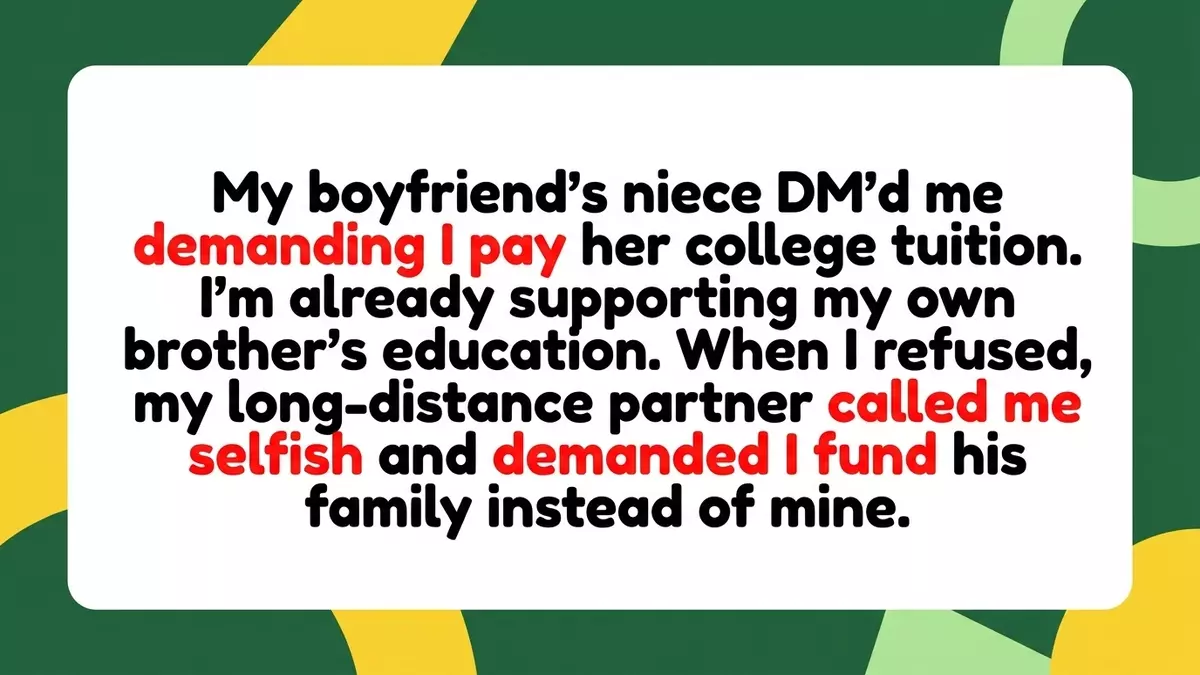
No. While minor, voluntary favors can occur in tight-knit families, directly soliciting thousands of dollars for tuition, loans, or luxury items from a relative's dating partner—especially in a long-distance relationship where you have never established a shared household—is highly inappropriate and a major breach of standard dating etiquette.
2. How should you decline a financial request from an in-law or relative?
The most effective approach is to keep your response brief, clear, and polite, without offering complex excuses that they can argue against. Simply state: "I understand this is a difficult situation, but that does not fit into my personal financial budget, so I will not be able to assist."
3. Why do long-distance relationships face unique boundary challenges?
Because long-distance couples primarily interact through screens, they often lack a shared, physical reality where boundaries can be naturally observed. Extended family members can easily develop skewed perceptions of a partner's wealth based solely on social media profiles, leading to unrealistic expectations and invasive digital demands.
4. What is financial abuse or exploitation in a relationship?
Financial exploitation occurs when a partner uses manipulation, guilt-tripping, gaslighting, or emotional coercion to control, access, or drain your financial resources for their own benefit or the benefit of their social circle, often leaving you financially stressed or vulnerable.
5. When should an aggressive financial demand be considered a dealbreaker?
A financial request becomes an absolute relationship dealbreaker when your partner takes the side of their entitled family over you, refuses to accept your polite refusal, attempts to make you feel guilty for protecting your savings, or demands access to your funds as a test of your love and commitment.