
Chapter 2
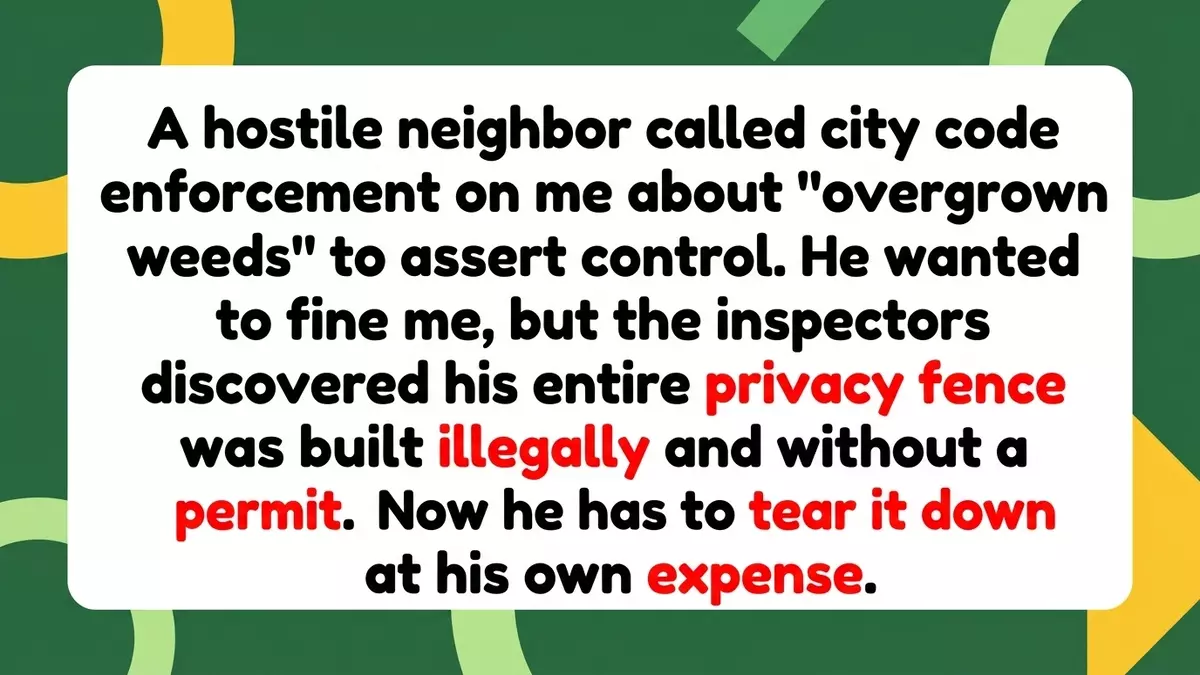
To the neighbor's horror, the thorough inspection exposed major violations on his own property. It turned out that the privacy fence he had proudly built years prior was erected without a permit and crossed directly over the official property line, encroaching on the homeowner's land. The city issued an uncompromising mandate: the neighbor had to tear down his own illegal fence at his own expense.
The Psychology of Boundary Aggression
This classic tale of neighborhood warfare perfectly illustrates what psychologists refer to as boundary aggression. According to relationship experts, property line disputes are rarely about the physical dirt or grass itself, but rather about a deep-seated psychological need for control.
| Dispute Element | Neighbor's Action | The Counter-Effect |
| The Target | 30-foot drainage strip | Transformed into a permanent gravel eyesore |
| The Weapon | Code enforcement complaint | Prompted an inspection of his own yard |
| The Structure | Unpermitted privacy fence | Ordered to be completely demolished |
When individuals feel powerless in other areas of their lives, they often overcompensate by aggressively policing their physical territory. By weaponizing municipal codes to bully a neighbor, this individual unfortunately invited the exact bureaucratic scrutiny that caused his own self-inflicted defeat.
Lessons Learned in Neighborhood Warfare
For those caught in similar living situations, social psychologists note that dealing with difficult neighbors requires clear, firm boundaries. Engaging in passive-aggressive escalating tactics usually invites further conflict, whereas a professional property survey is often the best first step to clarify property boundaries legally before emotions boil over.
While the online community collectively cheered for this flawless display of instant karma, a few practical minds and environmental advocates offered a gentler warning. They pointed out that while the plastic and pea gravel solution was a highly effective revenge plan, it could cause long-term soil and drainage pain for the homeowner down the road. Nonetheless, as a lesson in handling a bully, the result remains incredibly striking.
Frequently Asked Questions
Why did the neighbor call code enforcement in the first place?
The neighbor called code enforcement to complain about "overgrown weeds" on a 30-foot strip of land. He used this minor issue as an excuse to assert control after the homeowner tried to alter the area to fix a basement drainage problem.
What is malicious compliance, and how was it used here?
Malicious compliance involves strictly following an order or rule to the letter, but in a way that creates an undesirable outcome for the person who issued the rule. The homeowner complied with the weed complaint by removing all plants and replacing them with an ugly, heat-absorbing barrier of black plastic and pea gravel.