
Chapter 1
Roommate Refused to Act as Human Alarm Clock, Sparking Explosive Living Situation
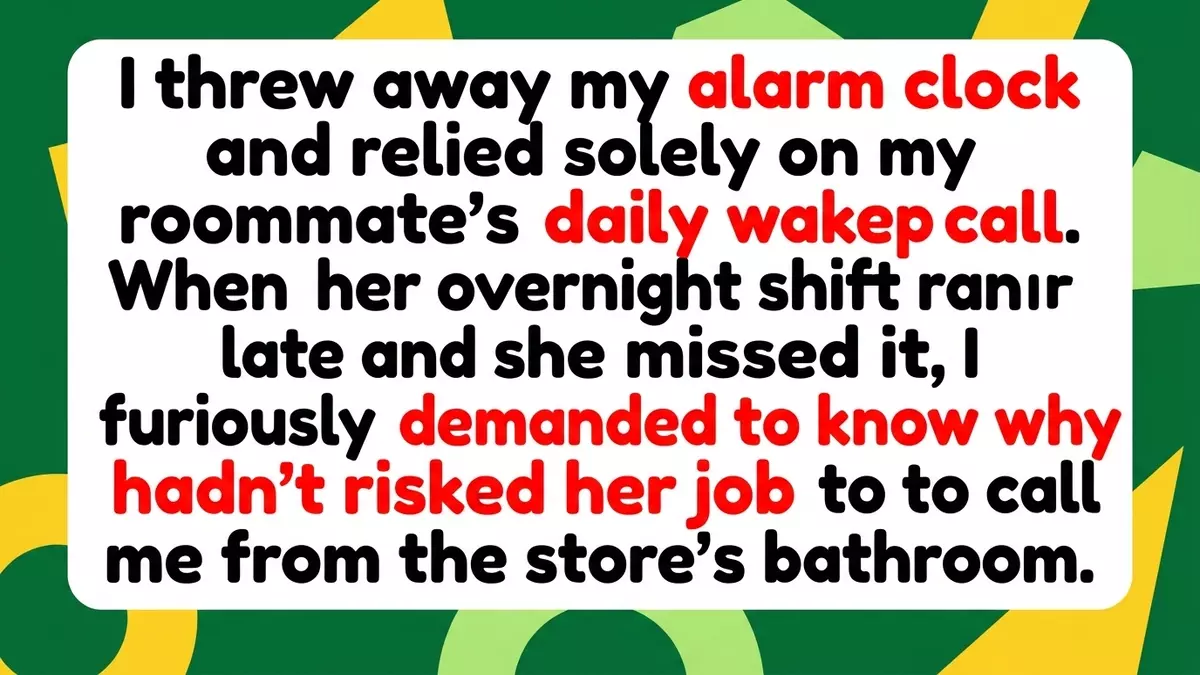
We all know that moment when the comforting safety of a shared routine slowly morphs into an unspoken, heavy expectation. For one 23-year-old woman, a kind daily favor from her roommate quickly transformed into a rigid, mandatory obligation—at least in her own mind. She had grown so accustomed to having her own personal wakeup call that she threw her actual alarm clock out of her morning routine entirely.
When her 19-year-old roommate, who worked taxing overnight shifts at a local pharmacy, failed to wake her up after getting stuck past her shift, the fallout was immediate and explosive. Instead of taking accountability for her own schedule, the woman confronted her roommate, demanding to know why she hadn’t called her from the store’s bathroom. This boundary-crossing roommate dispute shows just how quickly shared living arrangements can deteriorate when basic personal responsibilities are outsourced to others.

Roommate Refused to Act as Human Alarm Clock, Sparking Explosive Living Situation
The Psychology of Learned Helplessness in Shared Spaces
Setting up a delicate morning routine based entirely on someone else’s unpredictable night shift is a highly risky gamble. When an individual relies on a peer for basic daily responsibilities, even the smallest disruption can completely derail their entire day.
Gwen’s sudden inability to act as a human alarm clock highlights a classic psychological phenomenon known as learned helplessness. This occurs when an adult stops attempting to solve their own everyday problems because they have outsourced that responsibility to someone else. When a kind favor is repeated daily, it can easily be mistaken for a contractual obligation.
Enablers and Blurred Personal Boundaries
According to relationship experts, enabling behavior occurs when one person steps in to solve problems that another functional adult should handle themselves.
-
The Loss of Control: When the roommate stopped fulfilling the "alarm clock" role due to a work delay, the woman experienced an immediate loss of control, projecting her anger outward instead of practicing self-reflection.
-
The Restroom Expectation: Expecting an retail or pharmacy employee to jeopardize their job by sneaking into a busy restroom just to place a personal wake-up call is a clear indicator of unrealistic, entitled expectations.
-
The Blur of Favors and Duties: Treating a roommate like a personal assistant inevitably breeds deep resentment. In shared living spaces, drawing clear boundaries is essential to preventing domestic burnout and maintaining mutual respect.